Back to Research
InertiaUnit CommitmentGrid StabilityElectricity MarketsRenewable Integration
Inertia-Aware Unit Commitment and Remuneration in Decarbonized Power Systems
10 MinAGM Center Research Team
Why inertia matters in renewable-heavy grids and how new market designs can fairly compensate resources that provide it.
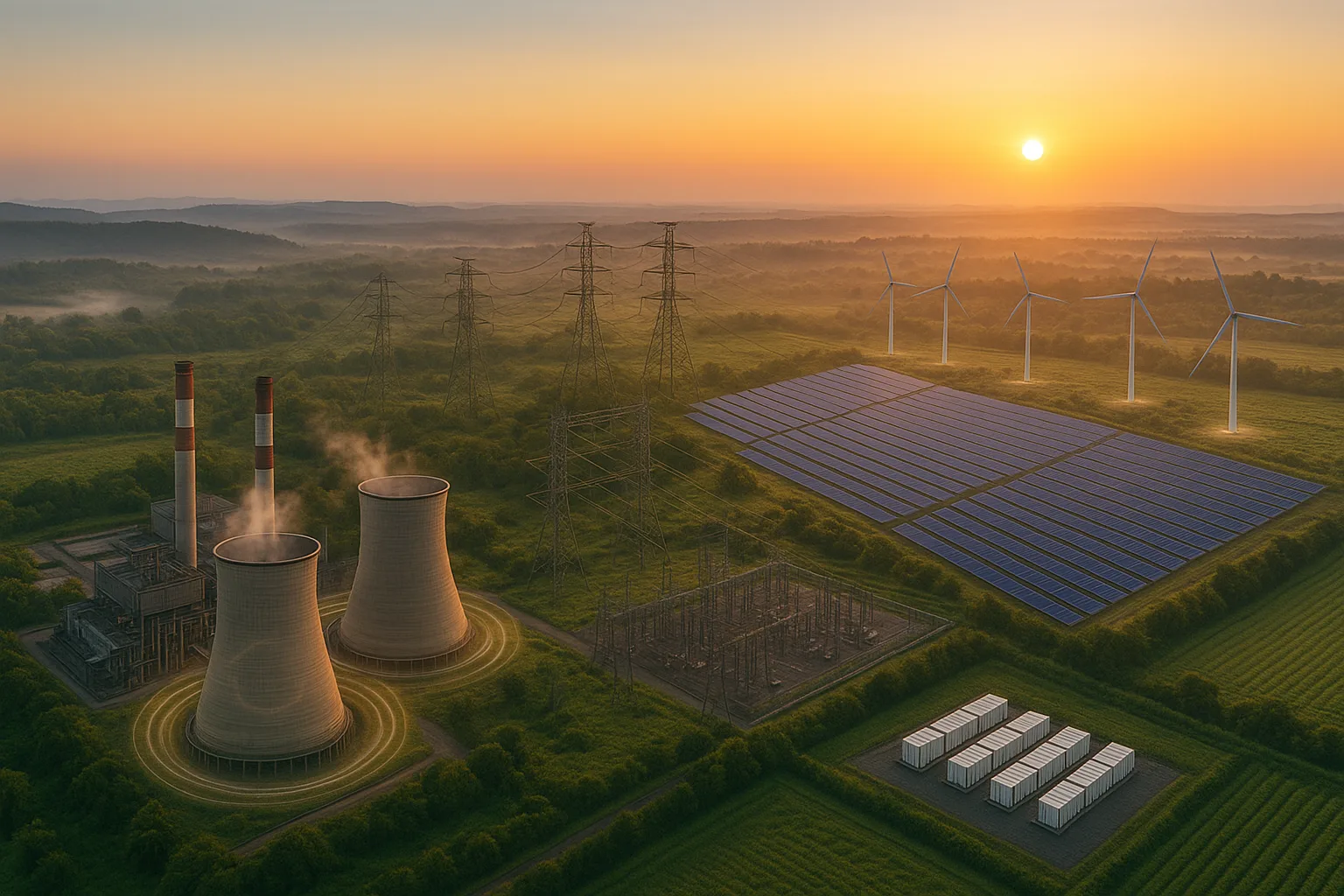
⚡ Inertia-Aware Operation in a Decarbonizing Power System
Why future power grids must plan for inertia—and pay for it properly.
As renewable energy grows, the grid changes in a fundamental way:
✔ Conventional generators (coal, gas, nuclear) → going offline
✔ Inverter-based renewables (PV, wind) → rapid increase
But there’s a hidden side effect:
We are losing the system inertia that keeps the grid stable.
When inertia is low:
Frequency drops faster after a disturbance
RoCoF (rate-of-change-of-frequency) becomes dangerously high
Load-shedding and protection systems may fail
The grid becomes more fragile
This study develops a framework that helps operators secure enough inertia and
design fair market payments for resources that provide it. :contentReference[oaicite:0]{index=0}
🧠 What Is Inertia, and Why Does It Matter?
Synchronous generators naturally resist sudden frequency changes because they have spinning mass.
Inverter-based generators (PV/wind) do not spin, so they provide little or no inertia unless specifically controlled.
If inertia is too low:
Frequency drops deeper (worse frequency nadir)
It drops faster (higher RoCoF)
Recovery becomes harder
A stable grid requires minimum inertia levels at all times.
🔍 Why Unit Commitment Must Include Inertia
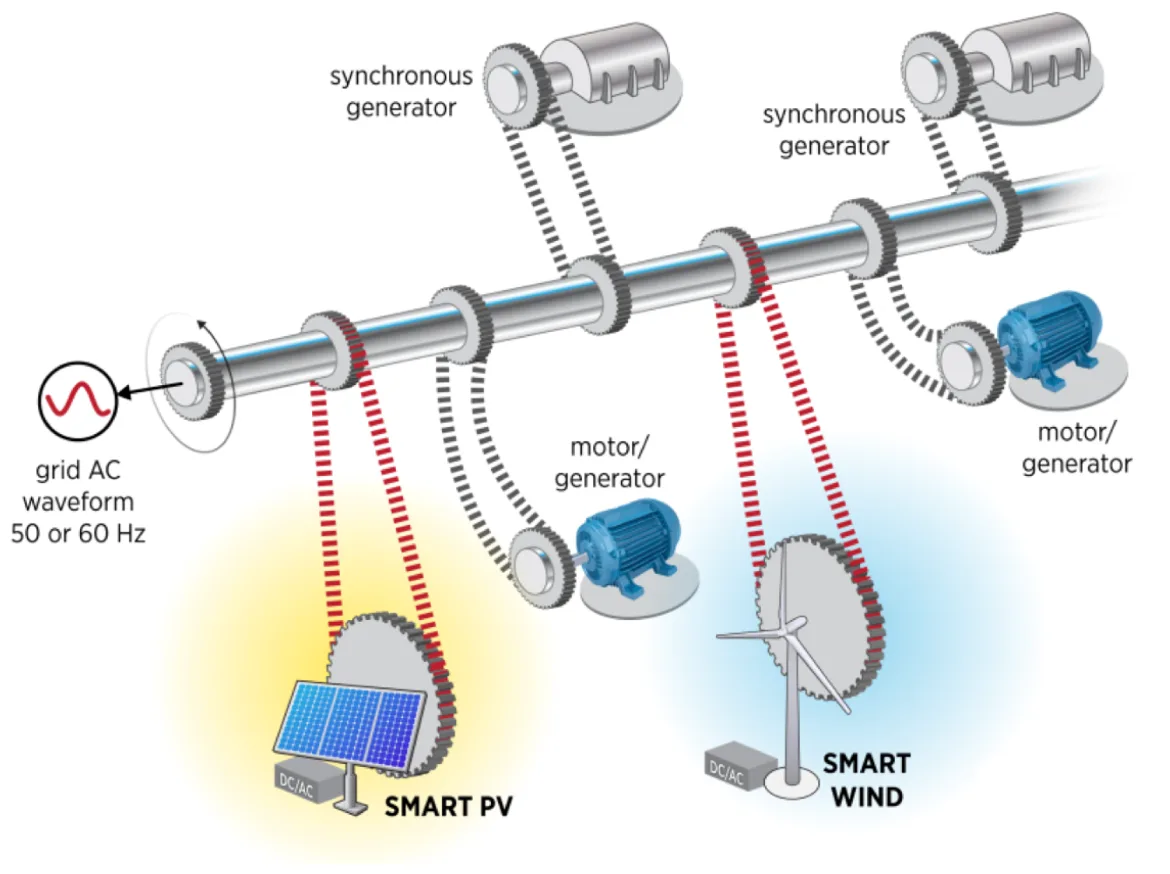
Figure 1. The representation of an electric power system showing tight coupling of synchronous generators and smart variation renewable energy systems.(Image source: NREL)
Traditionally, Unit Commitment (UC) decides:
which generators should run
how much they should generate
how reserves are scheduled
But UC did not consider inertia.
So as renewables increase:
cheaper generators turn off
but turning them off also removes inertia
risk of frequency collapse increases
This paper proposes:
Inertia-aware UC (IA-UC): Co-optimize energy, reserves, and inertia together.
Meaning:
Keep enough synchronous machines online
Use storage & renewable deloading to provide virtual inertia
Respect uncertainty in PV & wind
This allows operators to meet inertia requirements with fewer generators and lower cost.
🧩 Market Challenge: How Should We Pay for Inertia?
In energy markets today:
Energy is paid through LMP
Reserves are paid through reserve prices
But inertia has no standardized price
Different system operators use:
Region | How They Secure Inertia |
|---|---|
ERCOT | Reliability-Must-Run (contracts) |
CAISO | Minimum-online-commitment + uplift |
NESO | Stability market |
EirGrid | Long-term inertia contracts |
But these methods:
distort energy markets
require large uplift payments
give unclear investment signals
This paper compares 4 remuneration methods for inertia:
Marginal Pricing (MP)
Uplift
Approximate Convex Hull Pricing (aCHP)
Average Incremental Pricing (AIP)
🔧 How the Proposed Framework Works (Simple Explanation)
The model extends chance-constrained UC to:
handle uncertainty in PV/wind generation
handle uncertainty in renewable-provided inertia
enforce system-wide minimum inertia in every hour
allow ESS to provide inertia
determine costs & payments for inertia provision
The framework evaluates both operations and economics, not just physics.
🧮 Expert Snapshot: Representative IA-UC Optimization Formulation
Below is a compact optimization model capturing the core structure of the paper’s inertia-aware chance-constrained UC (IA-CCUC).
Objective
Minimize expected cost under renewable uncertainty:
Constraints
1) Unit commitment logic
Up/down-time constraints apply to (u_{i,t}).
2) Ramping limits
3) Generator capacity with chance constraint
4) ESS power & energy limits (chance-constrained)
5) DC power flow constraints
6) Reserve-sharing (AGC) constraint
7) System inertia adequacy (chance-constrained)
📈 Results: IEEE 118-Bus System
✔ Inertia-aware UC dramatically improves stability
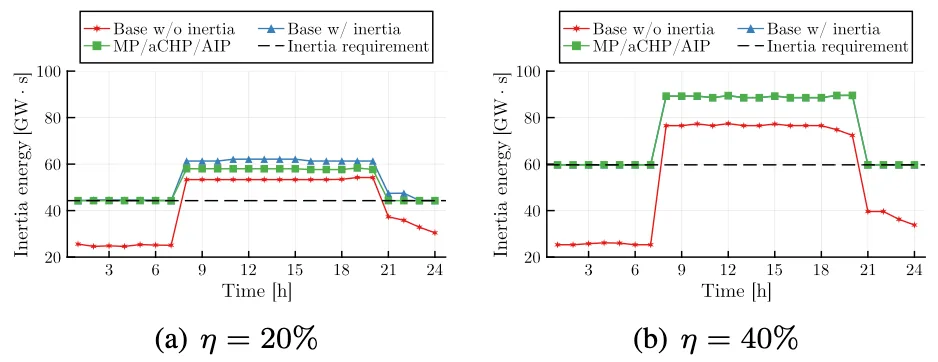
Figure 2. System inertia levels with and without inertia-aware scheduling.
Without inertia constraints:
Off-peak hours fall below the requirement
System becomes vulnerable to disturbances
With IA-UC:
All hours satisfy inertia limits
And fewer generators are needed than in “RMR-style” operation
✔ Frequency response improves significantly
A generator outage causes frequency to dip.
With IA-UC:
Frequency nadir improves by 0.13%
RoCoF improves by ~50%
Meaning the grid becomes much safer.
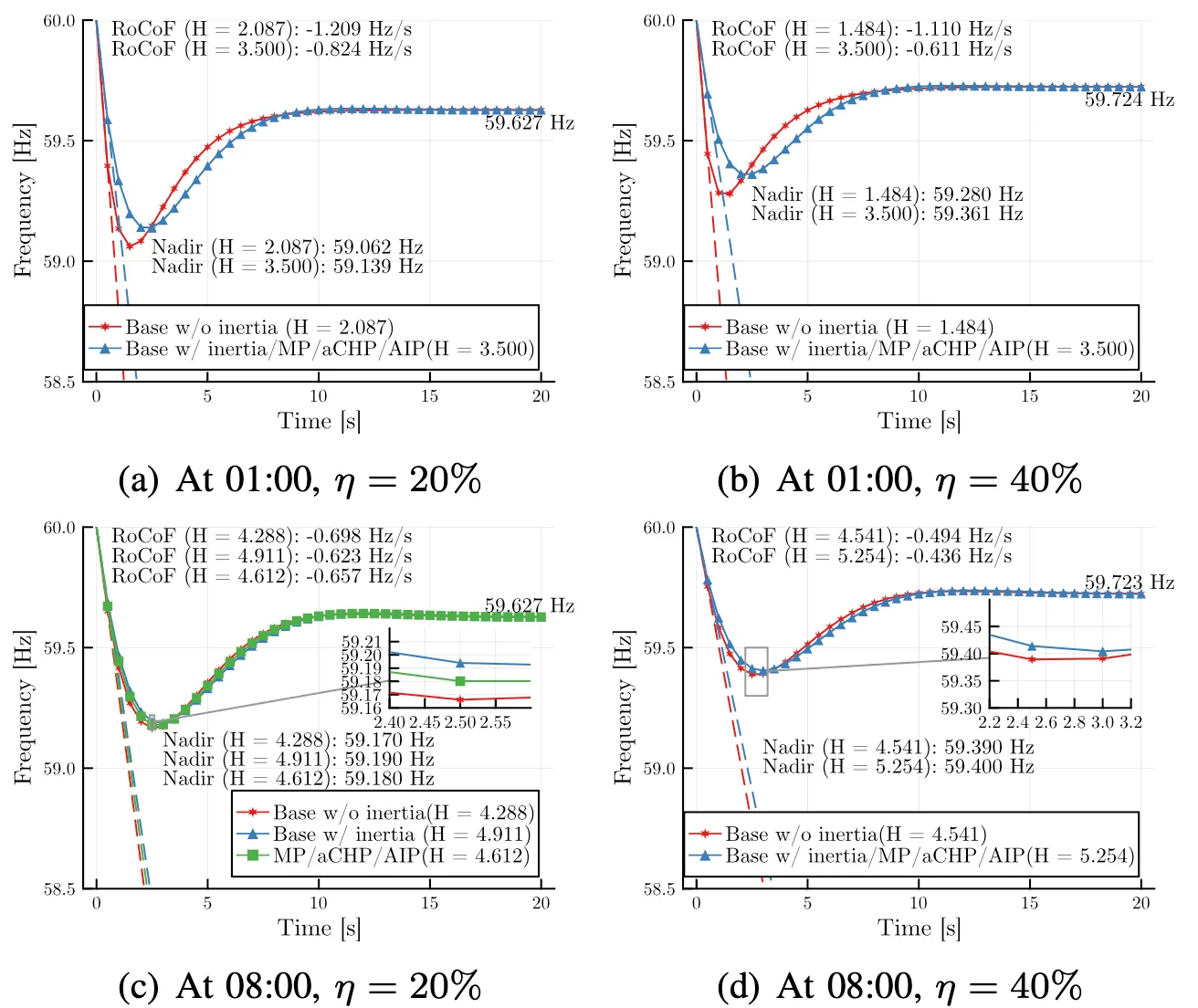
Figure 3. Faster and safer frequency response with inertia-aware UC.
✔ Commitment decisions become more efficient
Instead of forcing many expensive units online (as RMR does),
IA-UC selectively chooses just enough generators to meet inertia needs.
This reduces cost while maintaining stability.
💰 Which Remuneration Method Works Best?
The model compares MP, aCHP, AIP, and uplift.
✔ Marginal Pricing (MP)
Inertia price is often zero
Provides no investment signal
Requires large uplift payments
✔ Uplift
Ensures cost recovery
But offers no meaningful price signal for planning
✔ Average Incremental Pricing (AIP)
Embeds fixed/start-up costs into prices
Provides better compensation than MP
But inertia price still too weak
⭐ Approximate Convex Hull Pricing (aCHP) — Best Performer
Produces strong, transparent inertia prices
Minimizes uplift
Ensures revenue adequacy
Encourages investment in inertia-capable units
aCHP consistently outperforms the others.
📘 Reference
Kim, HyunJoong, and Jip Kim. "Inertia-aware Unit Commitment and Remuneration Methods for Decarbonized Power System." arXiv preprint arXiv:2412.10820 (2024). [link]