Back to Research
Regional Electricity PricingTransmission CongestionRenewable EnergyPower System Planning
Impact of Regional Electricity Pricing and Strategic Implications for Gyeonggi Province
10 MinAGM Center Research Team
A fact-based summary of why regional electricity pricing is being discussed in Korea and how it affects Gyeonggi Province.
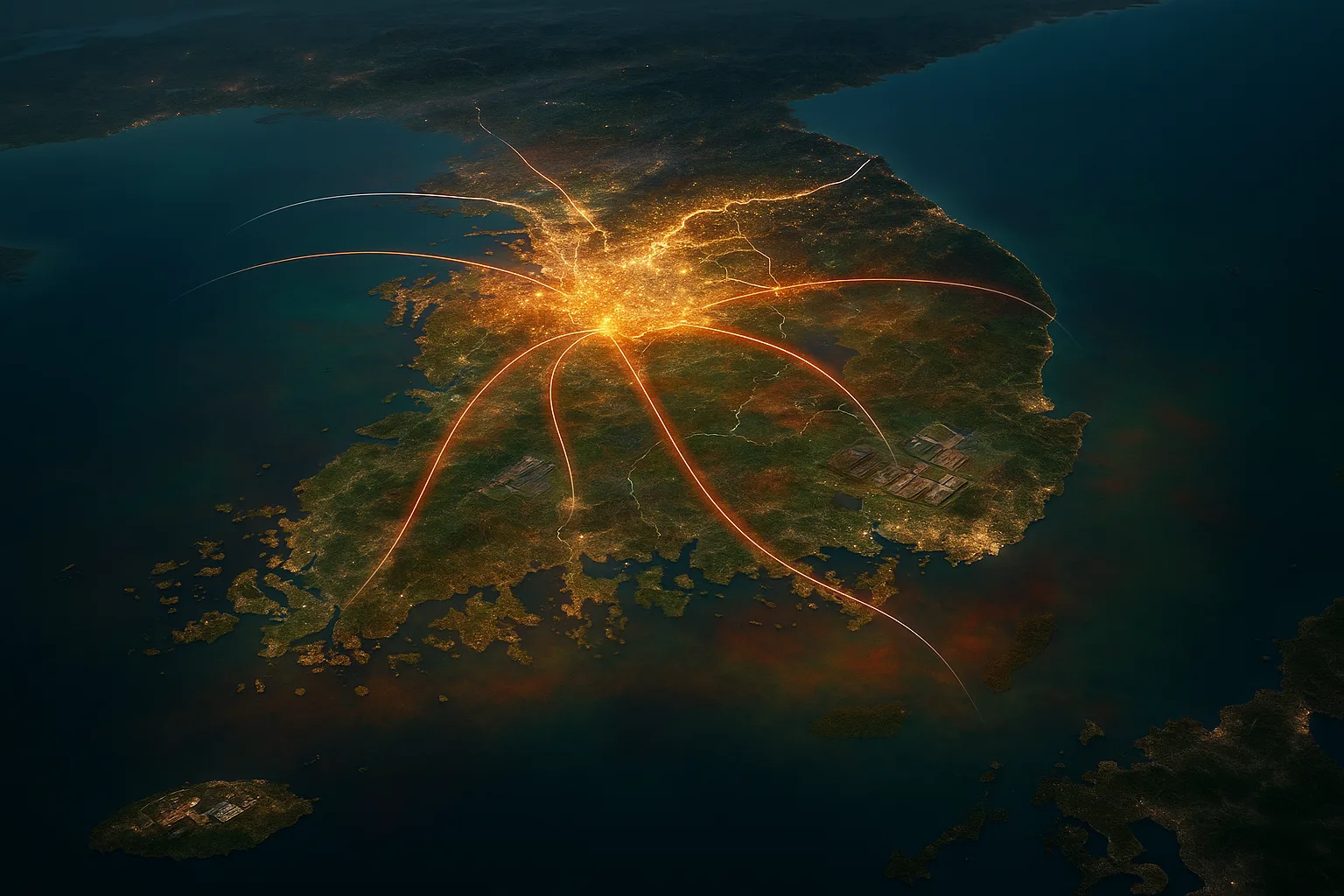
⚡ Why Regional Electricity Pricing Is Being Discussed
Korea’s structural supply-demand imbalance is driving policy change.
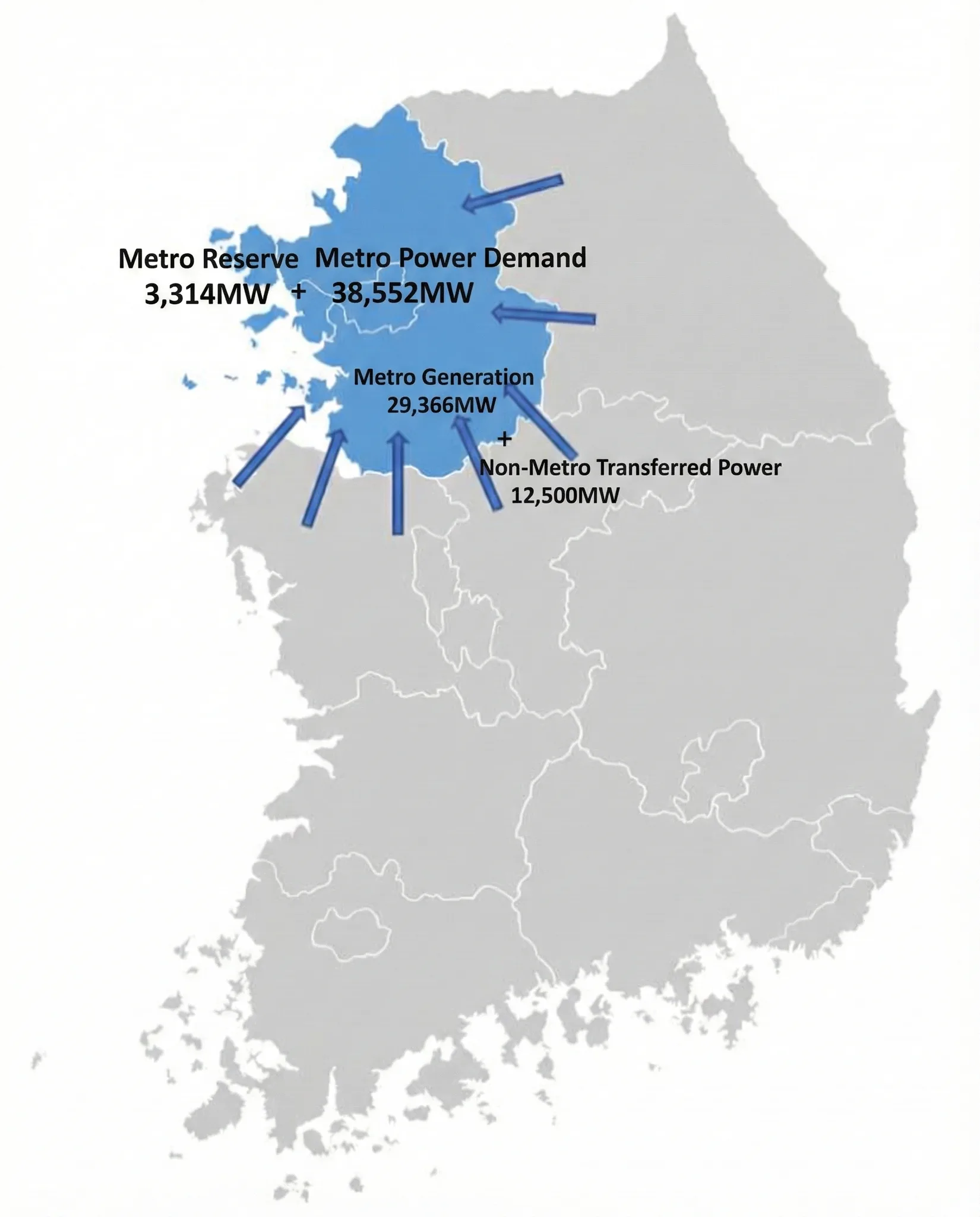
Figure 1. 2023 Seoul Metropolitan Area Power Supply & Demand (Peak Day).
According to the report, Korea’s electricity system faces a persistent mismatch between where electricity is consumed and where it is generated.
✔ Heavy demand concentration in the metropolitan area
In 2023, the Seoul–Gyeonggi–Incheon region accounted for 41.2% of Korea’s peak demand (38,522 MW out of 93,615 MW).
To meet this demand, 12,500 MW was imported from non-metropolitan regions.
✔ Demand in Gyeonggi Province will keep rising
By 2029, 601 out of 732 new data centers (82%) will be located in the metropolitan area.
These data centers are expected to consume 39,802 MW of electricity by 2029 (80.6% of national data center load).
The Yongin semiconductor cluster alone may require up to 16 GW of additional supply through 2053.
✔ Meanwhile, generation continues to concentrate outside the metropolitan area
From 2014 to 2024, the generation share outside the metro region increased from 71.89% to 74.23%,
while the metropolitan share fell from 28.11% to 25.77%.
This structural imbalance places heavy pressure on transmission lines.
⚠️ Transmission Congestion Is Reaching Its Limit
The metropolitan area is supplied by seven major transmission corridors.
Their allowable transfer capability (voltage-stability limit) is 10,900–12,600 MW.
On May 31, 2023 at 12:00, the imported power reached 11,058 MW,
or 99.62% of the upper limit.
At the same time, new transmission construction faces public resistance:
The Hanam HVDC converter station project was rejected due to insufficient community acceptance.
Several 345 kV and HVDC projects have been delayed 66 to 150 months beyond schedule.
Transmission expansion is no longer a reliable solution.
📜 Policy Background: Legal Basis for Regional Pricing
The Special Act on Distributed Energy (2024) allows electricity tariffs to differ by region,
considering transmission and distribution costs.
Government direction:
2025 (first half): Regional differentiation in the wholesale market
2026 and beyond: Potential introduction of regional retail tariffs
KPX’s proposed market structure:
Short-term: Zonal pricing (Metropolitan / Non-metropolitan / Jeju)
Long-term: Nodal pricing at the bus level
🧠 How the Report Conducts Its Analysis
Our study uses:
The KPG193 synthetic Korean power system (193 buses, 123 generators, 407 lines)
Hour-by-hour demand and renewable data from 2022
🧪 Market Models Used in the Report (M1–M4)
Our study evaluates four different electricity market designs, ranging from a simple single-price system to a full nodal pricing system.
These models determine how regional electricity prices are calculated and how transmission congestion is reflected.
Model | Description | Key Characteristics |
|---|---|---|
M1 — Single Price Market | One uniform SMP nationwide | • No congestion modeling |
M2 — SCED-Based SMP | SCED with a single SMP | • Congestion handled via redispatch |
M3-1 — Zonal SMP | Two SMP zones | • Metropolitan vs Non-metropolitan prices |
M3-2 — Zonal LMP (Load-Weighted) | Load-weighted LMP for each zone | • Uses zonal marginal price |
M4 — Nodal Pricing (LMP) | Bus-level marginal pricing | • Fully models congestion & losses |
📈 Key Findings (Strictly from the Report)
1️⃣ Metropolitan wholesale prices barely change
Across scenarios:
Metropolitan prices remain similar to the current SCED-based market (M2).
A slight decrease appears only in M3-2 and M4.
2️⃣ Non-metropolitan prices fall sharply (~40%)
The result explicitly states:
“Non-metropolitan market prices decrease by approximately 40%.”
This creates major revenue impacts for non-metropolitan generators.
3️⃣ Relative profitability shifts toward Gyeonggi Province
Non-metropolitan generators see significant revenue reductions.
Metropolitan regions (including Gyeonggi) see little change, creating a relative advantage.
4️⃣ Retail tariffs: Gyeonggi consumers may feel disadvantaged
If retail tariffs follow wholesale prices:
Non-metropolitan retail tariffs fall significantly.
Metropolitan tariffs remain similar.
This produces risk of perceived unfairness among metropolitan consumers.
5️⃣ Renewable investment potential in Gyeonggi remains limited
High land costs result in poor economic feasibility for most ground-mounted solar projects.
However, rooftop PV (LCOE ~ 96원/kWh) is economically viable across all cities in Gyeonggi Province.
6️⃣ Industrial clusters face steep price increases in nodal pricing
When industrial load increases by 3 GW in scenario M4:
Yongin semiconductor cluster experiences 34% higher LMP (average scenario).
Paju LCD complex shows up to 36% increase (autumn-night scenario).
Industrial zones without nearby generation resources are especially vulnerable.
🧭 Strategic Recommendations in the Report
✔ 1. Develop new generation capacity near congestion-prone areas in Gyeonggi
To prevent steep LMP increases when local loads grow.
✔ 2. Prioritize rooftop solar as the main renewable strategy
The only renewable option with strong economic feasibility across all cities.
✔ 3. Prepare policies to mitigate “consumer dissatisfaction”
Metropolitan retail prices may remain higher than non-metropolitan regions.
✔ 4. Manage risks in fast-growing industrial regions (Yongin, Paju)
Where future nodal prices may spike due to limited local generation.
📘 References
Kim, Jip, et al. “지역별 전기요금 차등제 도입 영향 및 경기도 대응 방안 (Impact of Introducing Regional Electricity Pricing and Strategic Responses for Gyeonggi Province)". Gyeonggi Research Institute, 2025.[link]