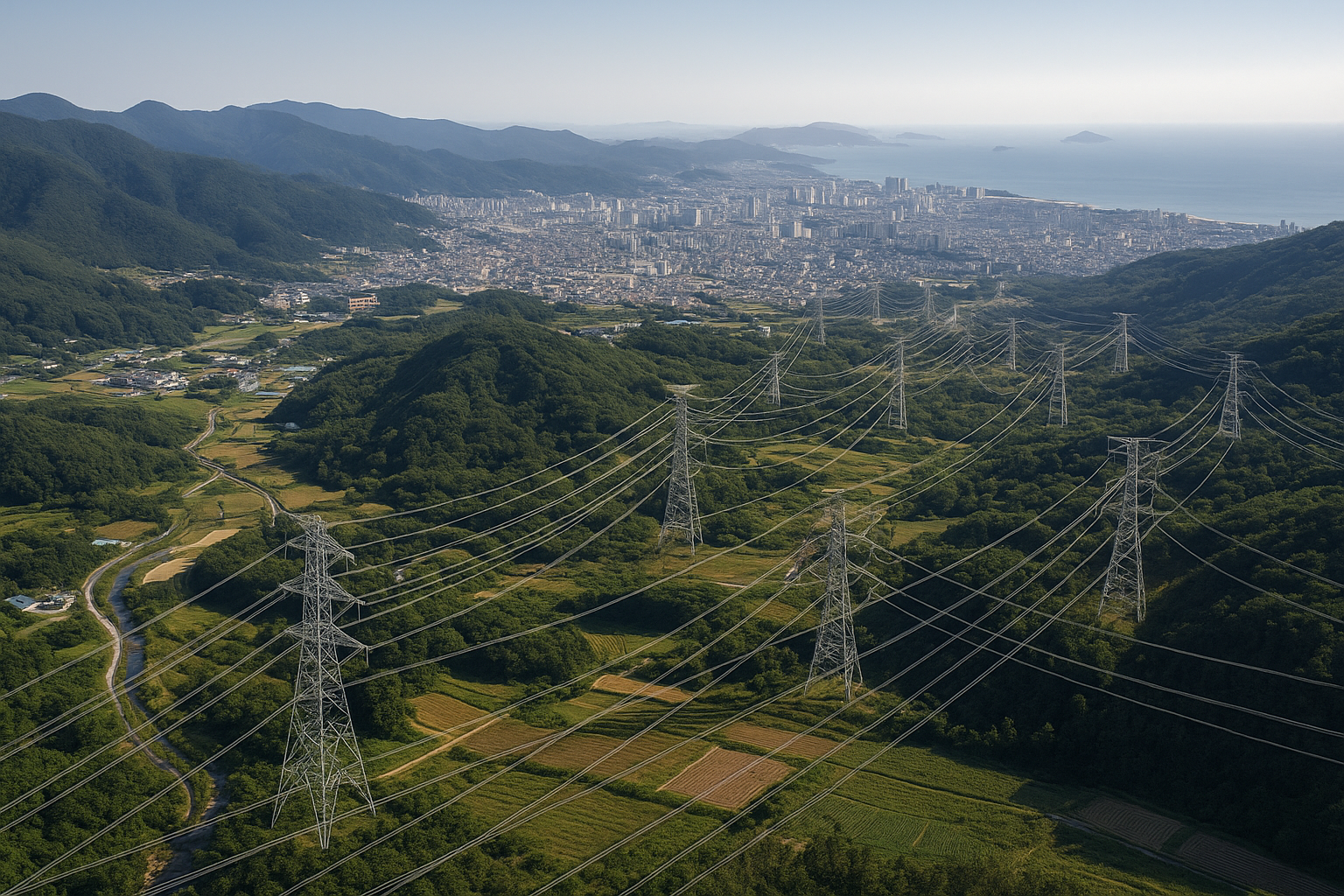
KPG 193 — A Synthetic Korean Power Grid for Decarbonization Studies
Why Korea needs an open, realistic power grid test system and how KPG193 enables decarbonization research.
🇰🇷 KPG 193: An Open Synthetic Korean Power Grid
A practical explanation of why KPG193 matters for Korea’s energy transition.
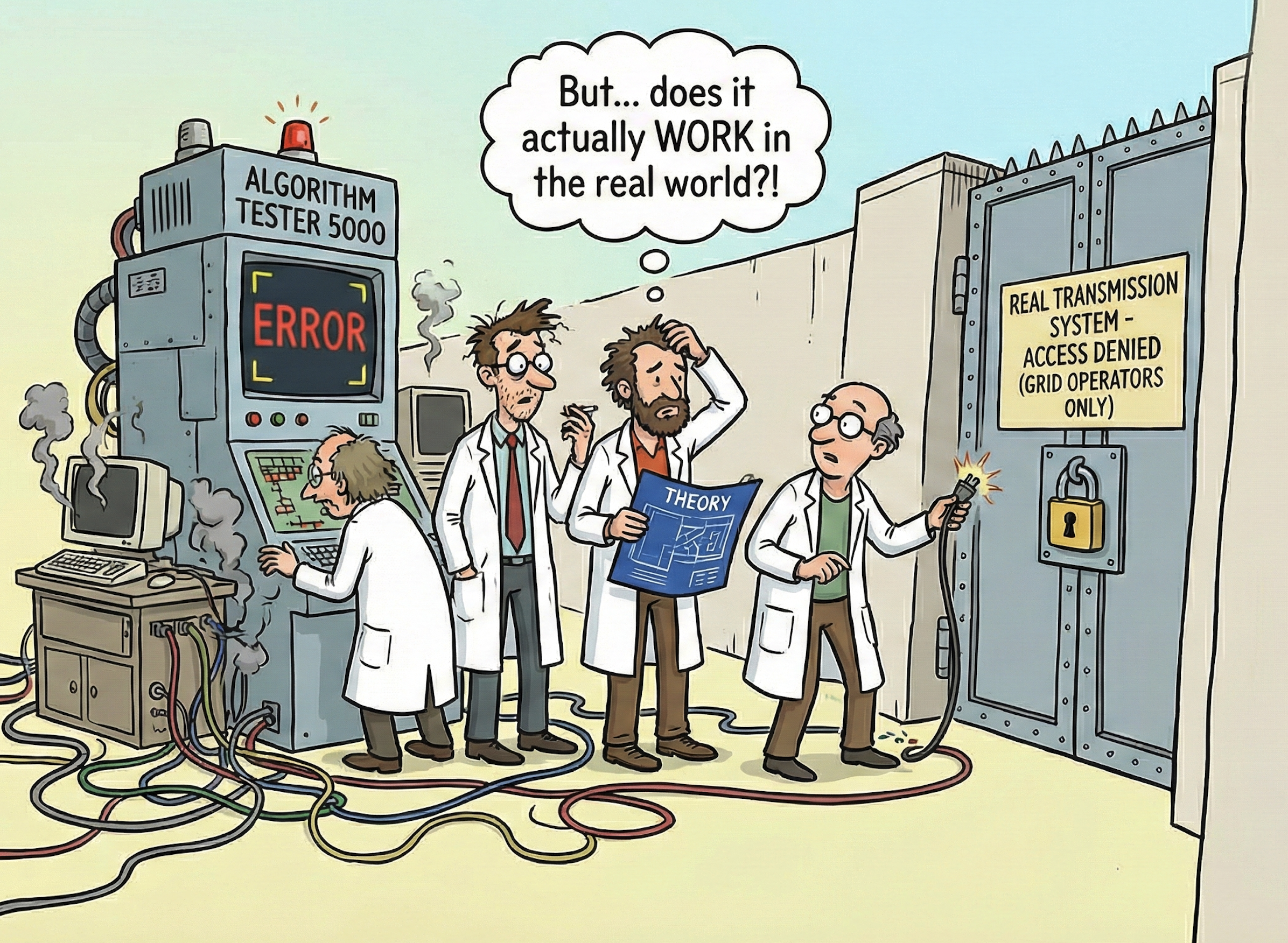
Figure 1. Grid data is not publicly available!
Korea faces a unique challenge:
renewable penetration is still low, electricity demand is highly concentrated in Seoul,
and detailed grid data is not publicly available.
At the same time, researchers, policymakers, and planners need
realistic grid models to study decarbonization, renewable integration, grid congestion, and investment planning.
But until recently, Korea had only two options:
- A realistic system with thousands of buses (not publicly available)
- A simple 11-zone model (too coarse for serious analysis)
To fill this gap, the KPG 193 synthetic grid was created —
a publicly available, realistic, and computationally manageable model
that captures the key characteristics of the Korean power system.
🔍 Why Korea Needs a Synthetic Grid
✔ No access to detailed grid topology
Most transmission line locations, capacities, and equipment details are not publicly released.
✔ Renewable transition requires planning tools
To evaluate offshore wind, large-scale solar, hydrogen, storage, and interconnection options,
researchers need a realistic network model.
✔ Korea’s grid has special features
- Huge demand concentration in the capital region
- Major generation (coal, nuclear) located along the east coast
- Solar mostly in the southwest
- An isolated grid (no synchronous links to neighbors)
The KPG193 system mimics these core characteristics.
🧠 How KPG 193 Was Built (Simple Explanation)
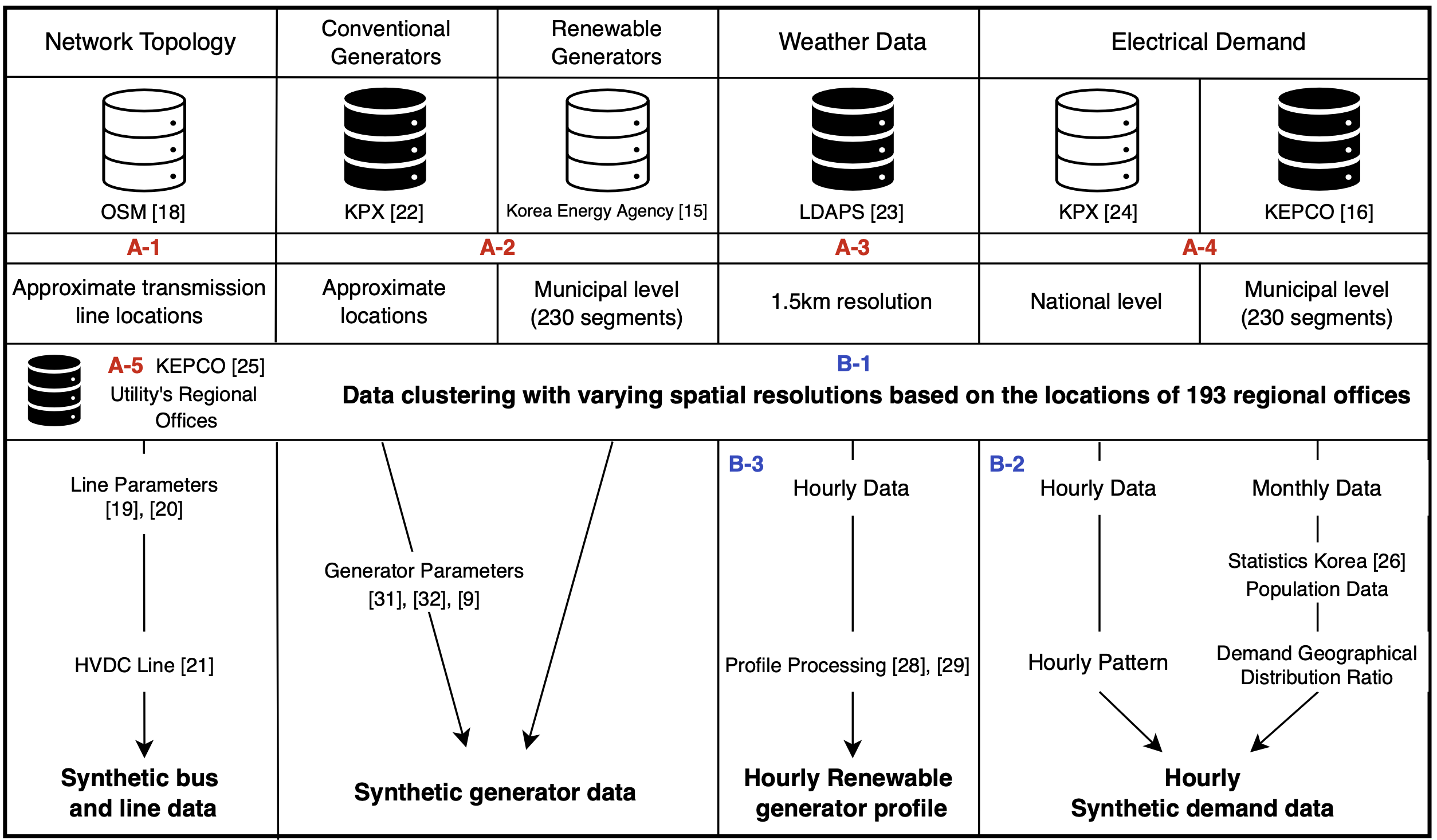
Figure 2. Data workflow used to build the synthetic Korean power grid.
KPG193 was created by combining multiple open datasets, each with different spatial resolutions:
- OpenStreetMap (OSM) for approximate transmission line locations
- KPX & KEPCO for power plant capacity, municipal electricity demand, and utility office boundaries
- LDAPS weather data for solar and wind resource profiles
- Population statistics to allocate demand realistically
Because exact grid data is unavailable, the authors used a clever clustering technique:
KEPCO’s 193 regional offices → 193 buses in the synthetic grid
This ensures the system preserves realistic geography
(demand clusters, coastal generation, renewable-rich regions)
without revealing sensitive information.
📊 What’s Inside KPG193?
The final system includes:
- 193 buses
- 122 generators
- 407 transmission lines
- HVDC link (Bukdangjin–Godeok, manually added)
- Hourly demand & renewable profiles (2022)
- MATPOWER-formatted network data
Generation Mix (KPG193 vs Actual 2022)
| Fuel | Actual | KPG193 |
|---|---|---|
| Coal | 32.5% | 33.9% |
| Gas | 27.5% | 27.8% |
| Nuclear | 29.6% | 28.2% |
| Renewables | 9.6% | 10.1% |
KPG193 closely matches the national mix — a key requirement for realistic decarbonization studies.
🗺 Key Geographic Characteristics (Captured Realistically)
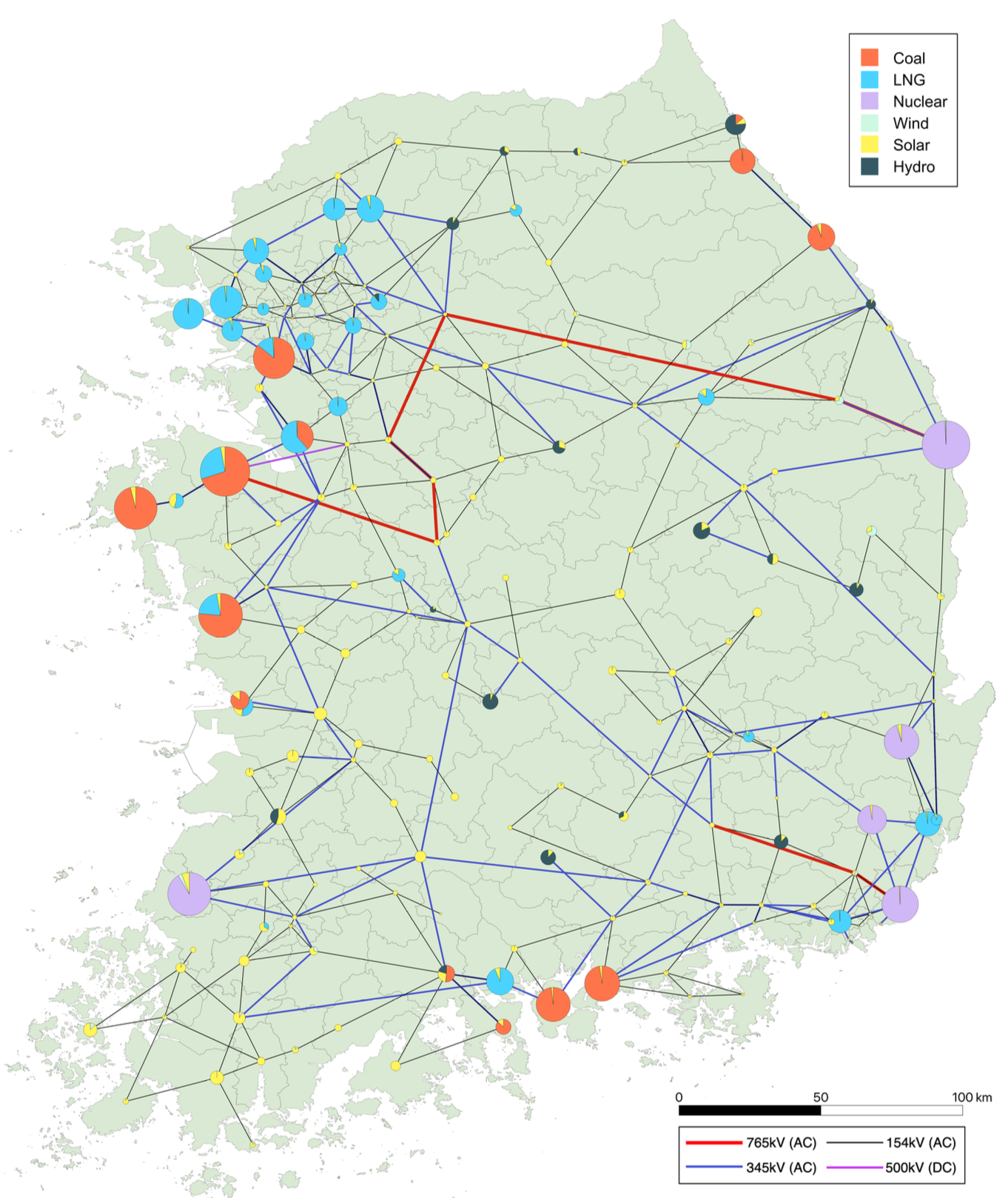
Figure 3. Network topology and generator locations in KPG193.
KPG193 reflects the Korean grid’s core features:
✔ 40% of national demand is concentrated near Seoul
(Shown in the upper circled region in Fig. 3 of the paper.)
✔ Major coal & nuclear plants along the east coast
Power flows predominantly northwest toward the capital.
✔ Solar-heavy southwestern region
Leads to overvoltage issues in weak-grid areas, also observed in real operation.
✔ Long transmission distances (200–300 km)
A major challenge for Korea’s renewable expansion.
These patterns appear clearly in KPG193’s ACOPF validation.
🧪 Validation: Does KPG193 Behave Like the Real Grid?
The model was tested using:
- Daily Unit Commitment (UC)
- Hourly AC-OPF (ACOPF) for all of 2022
Results show:
✔ UC generation mix matches actual 2022 data within 1.4%
✔ All hours yielded feasible ACOPF solutions
✔ Power flow patterns reproduce known Korean grid behaviors
✔ Voltage patterns resemble real congestion & weak-grid areas
This means KPG193 is not just a synthetic dataset —
it faithfully reproduces operational characteristics of the real Korean grid.
⚠️ Limitations (Honest but Simple)
KPG193 is built entirely from open data, so it cannot include:
- Reactive compensation devices (SVC, STATCOM, shunt caps)
- Exact transformer tap settings
- Detailed substation layouts
- Fully accurate OSM topology (OSM may be outdated)
Still, it serves as the most realistic publicly available Korean transmission test system.
💡 Why KPG193 Matters
Researchers, utilities, and policymakers can now use KPG193 to study:
✔ Renewable integration strategies
✔ Transmission expansion planning
✔ DLR, OTS, OPF, UC, and ML-based optimization
✔ Climate-driven grid stress
✔ Hydrogen and storage deployment
✔ Grid resilience & decarbonization pathways
KPG193 enables Korea to join global open-grid modeling efforts,
like SciGRID (EU), PyPSA-Eur, and the Texas backbone systems.
📘 Reference
Song, G., & Kim, J. “KPG 193: A Synthetic Korean Power Grid Test System for Decarbonization Studies.” 2025 IEEE Power & Energy Society General Meetings (PESGM) [link]